It’s easy to get attention online. But not so easy to turn that attention into real business opportunities. The real challenge for small business in 2026 isn’t just about reaching more people. Getting it to the right people, building their trust and giving them a reason to be customers.
That is where lead generation strategies for small businesses become essential. A strong lead generation system creates a steady flow of potential customers instead of forcing a business to depend only on referrals, random enquiries or occasional advertising campaigns.
Customer behaviour has changed too. People research businesses on search engines, websites, social platforms, reviews and videos and through AI discovery tools before making their decisions. So at every key point in the buyer journey, a business needs to be useful, visible, credible and easy to contact.
At Trailblazer Visionaries, the focus is on building growth strategies around measurable business goals rather than chasing traffic or impressions alone. Effective lead generation connects visibility with meaningful actions such as enquiries, calls, consultations, demo requests or purchases.
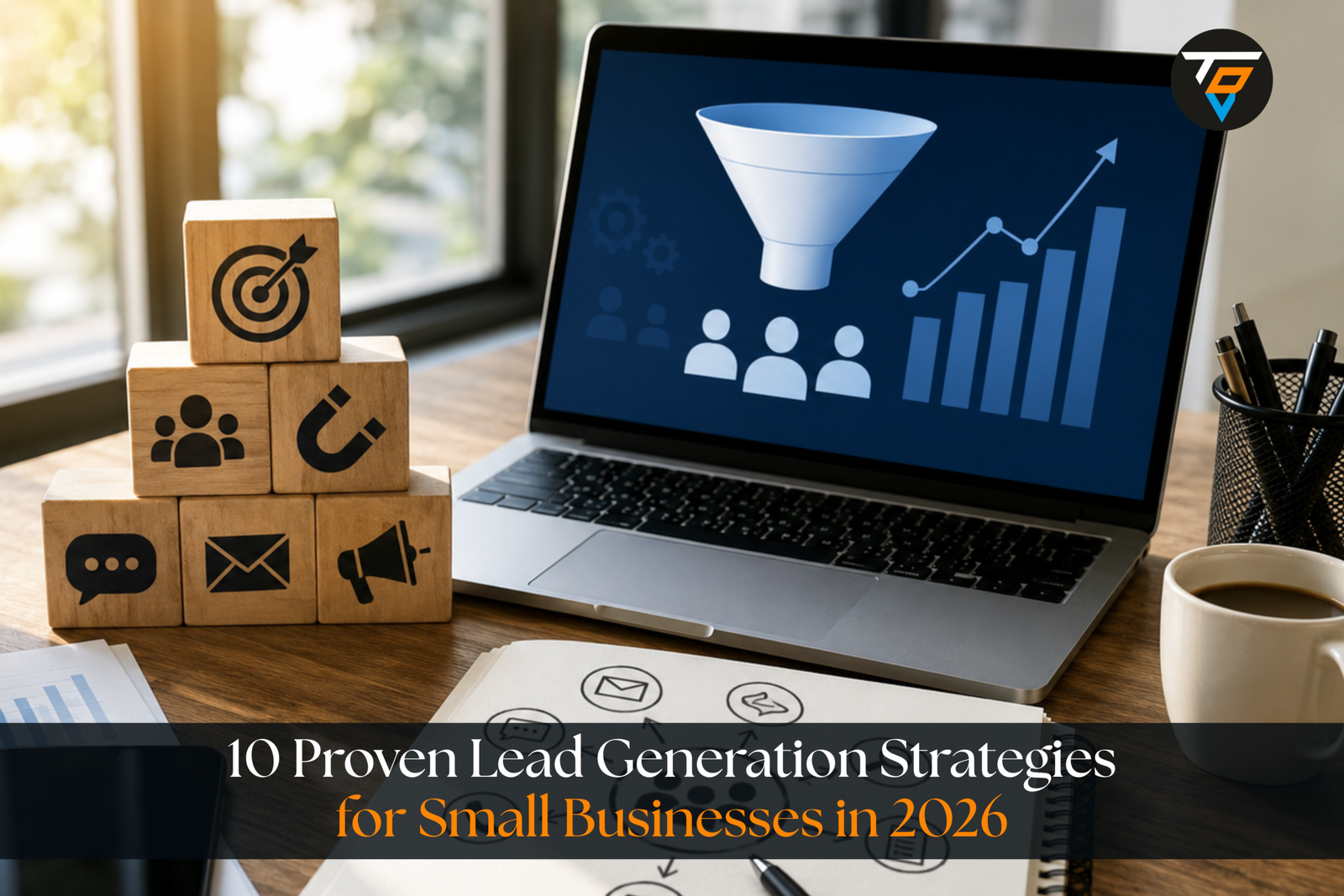
Here are 10 practical strategies small businesses can use to build a stronger and more predictable lead pipeline in 2026.
1. Build a High-Converting Website
A website should do more than explain who you are. It should guide visitors toward a specific next step.
Potential customers arrive through Google, social media, an ad or a referral. The website should quickly tell visitors what the business does, who it serves and why they should trust it.
Create Clear Conversion Paths
Every important page should have a logical call to action, such as:
- Request a quote
- Book a consultation
- Schedule a demo
- Call now
- Download a guide
- Submit an enquiry
Avoid overwhelming visitors with too many competing actions. A clear path makes it easier for interested users to become leads.
Trust signals also matter. Testimonials, case studies, genuine reviews, team information, certifications, transparent contact details and examples of previous work can reduce uncertainty.
A fast, mobile-friendly experience is equally important. If pages load slowly or forms are difficult to complete on a phone, valuable prospects may leave before making contact.
2. Use SEO to Capture High-Intent Search Traffic
Search engine optimization can attract potential customers at the exact moment they are looking for information, products or services.
Unlike interruption-based advertising, search connects businesses with people who already have a need or problem to solve.
Target Search Intent, Not Just Keywords
Good SEO begins with knowing what someone is looking for.
For example, informational searches might be questions about solving a problem and commercial searches might be comparing providers, services, pricing or solutions.
Small businesses should be creating content for every stage of the journey:
- Educational blog posts
- Service pages
- Comparison guides
- Local landing pages
- Case studies
- Frequently asked questions
This approach strengthens small business lead generation because organic traffic becomes more relevant to the services the company actually provides.
Strong SEO also requires accurate information, useful content, technical performance, internal linking and clear expertise. Publishing dozens of shallow articles simply to target keywords is unlikely to create sustainable results.
3. Create Valuable Lead Magnets
Not every website visitor is ready to buy immediately. Some need more information before making a decision.
A lead magnet provides something genuinely useful in exchange for contact information, allowing the business to continue the conversation.
Offer Value Worth Sharing Contact Details For
Effective lead magnets may include:
- Checklists
- Templates
- Industry reports
- Calculators
- Free assessments
- Mini-courses
- Practical guides
- Webinars
The key is relevance.
A generic ebook may attract downloads but produce few qualified prospects. A focused resource that solves a specific customer problem is more likely to attract people with genuine interest.
For example, a marketing agency serving local businesses could offer a website conversion checklist rather than a broad guide titled “Everything About Marketing.”
The more closely the resource matches customer intent, the more useful the resulting leads become.
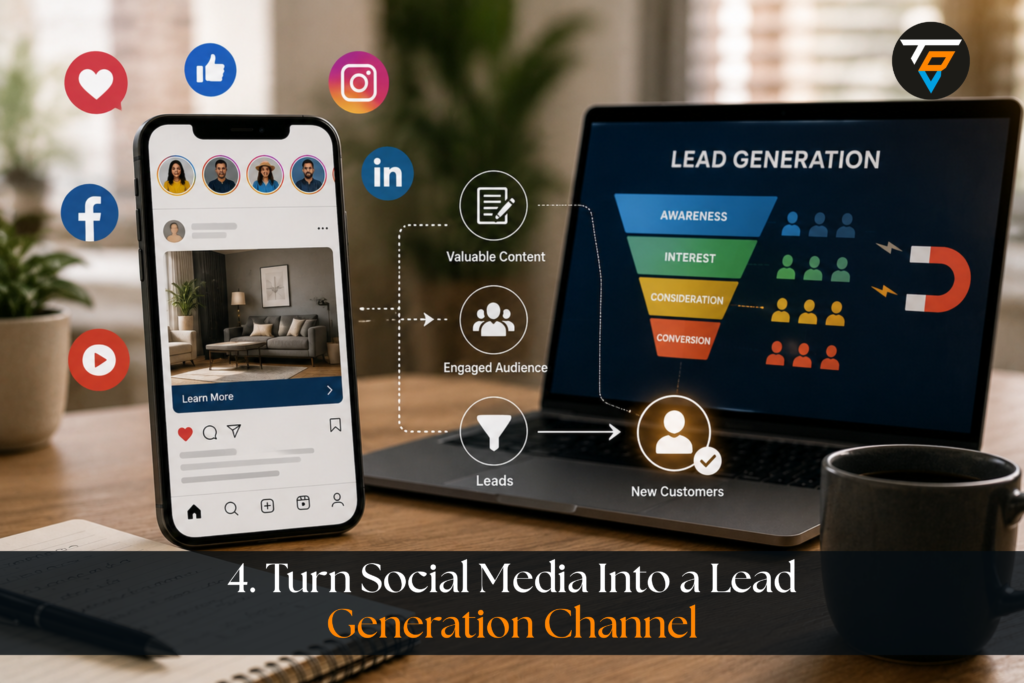
4. Turn Social Media Into a Lead Generation Channel
Social platforms can build awareness, but likes and followers alone do not create sustainable business growth.
A strong social strategy connects valuable content with a clear conversion journey.
Publish Content That Builds Trust
Instead of posting only promotional graphics, businesses can share:
- Customer success stories
- Educational videos
- Industry insights
- Behind-the-scenes expertise
- Common mistakes and solutions
- Product demonstrations
- Frequently asked questions
The goal is to demonstrate expertise before asking for a sale.
These online lead generation strategies work best when users have a simple next step. That might mean visiting a focused landing page, sending a direct message, registering for an event or booking a consultation.
Businesses should also track which content produces actual enquiries rather than judging success only by engagement metrics.
5. Use Paid Advertising With Precise Targeting
Paid advertising can generate leads quickly, but poorly planned campaigns can also consume a small business budget without producing meaningful returns.
Successful campaigns begin with clear targeting and a strong offer.
Match the Platform to Customer Intent
Different advertising platforms serve different purposes.
Search advertising can capture people actively looking for a solution. Social advertising can create demand, retarget previous visitors or introduce an offer to a specific audience.
A strong campaign usually aligns four elements:
- The right audience
- A relevant message
- A compelling offer
- A focused landing page
For digital marketing for lead generation, clicks should never be the final success metric. Businesses should measure qualified leads, conversion rates, customer acquisition costs and ultimately revenue.
This prevents marketing decisions from being based on vanity metrics.
6. Use Email Nurturing to Convert Interested Prospects
Many leads do not become customers after their first interaction.
They may be researching options, waiting for approval, comparing prices or simply not be ready to make a decision.
Email nurturing helps businesses stay relevant during this period.
Personalize Follow-Ups Around Customer Needs
An effective email sequence can include:
- A helpful welcome message
- Educational resources
- Customer success stories
- Answers to common objections
- Relevant service information
- A clear next step
Automation can make this process efficient, but communication should still feel useful and human.
Avoid sending the same promotional message repeatedly. Segment contacts according to their interests, actions or stage in the buying journey whenever possible.
Timely and relevant follow-up builds familiarity and trust, increasing the chance that a prospect remembers the business when they are ready to act.
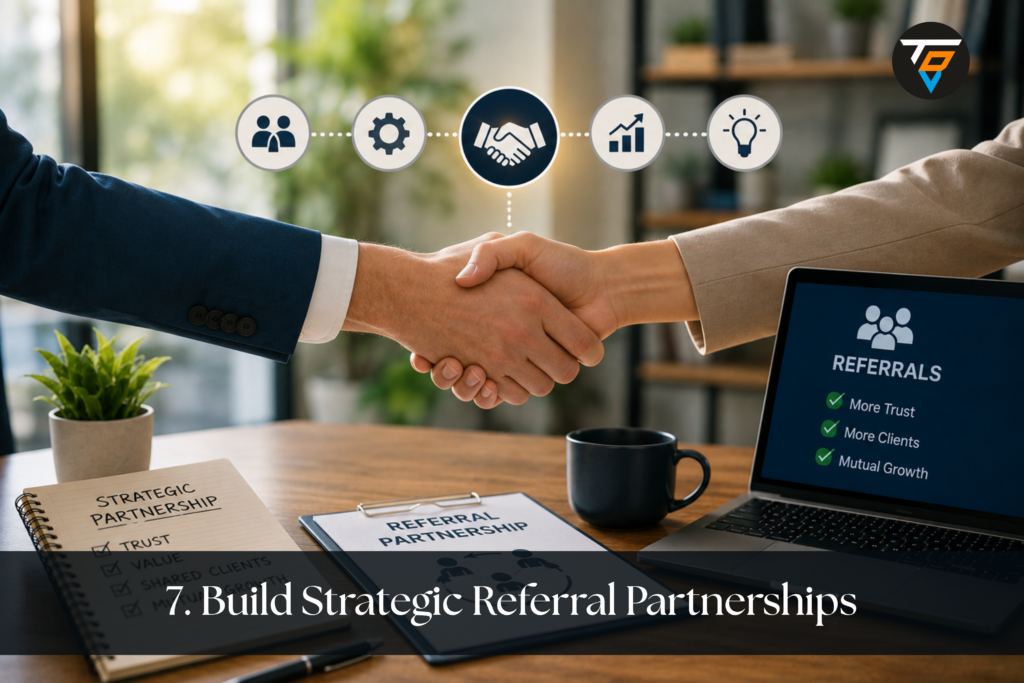
7. Build Strategic Referral Partnerships
Referrals are powerful because they transfer trust from one person or business to another.
Small businesses can extend this approach by forming structured partnerships with complementary service providers.
Create Mutually Valuable Partnerships
Consider which businesses serve the same audience without directly competing with you.
An accountant might partner with a business consultant. A real estate professional could collaborate with mortgage or interior design specialists. A web development company might partner with a digital marketing agency.
Successful partnerships require:
- Clear mutual value
- Reliable service quality
- Transparent communication
- Easy referral processes
This can be particularly valuable for companies exploring B2B lead generation strategies, where credibility and professional relationships often influence purchasing decisions.
Partnerships should focus on helping customers rather than simply exchanging contact lists.
8. Use Reviews, Case Studies, and Social Proof
Before contacting a business, many potential customers look for evidence that it can deliver what it promises.
Social proof reduces perceived risk.
Turn Customer Results Into Credibility
Businesses should actively collect and display:
- Verified customer reviews
- Detailed testimonials
- Before-and-after results
- Case studies
- Client success metrics
A strong case study explains the customer’s challenge, the solution provided and the measurable outcome.
Specific evidence is usually more persuasive than vague claims such as “we provide the best service.”
This is also where E-E-A-T principles become valuable. First-hand experience, demonstrated expertise, transparent business information, and trustworthy claims help both users and search engines understand why a company deserves credibility.
9. Improve Local Search Visibility
For businesses serving specific geographic areas, local search can be one of the strongest sources of qualified enquiries.
People searching for a nearby service often have high intent and may be close to making a decision.
Optimize Your Local Digital Presence
Keep business details consistent across relevant online platforms and ensure customers can easily find accurate information about services, location, contact details and operating hours.
Businesses should also:
- Encourage genuine customer reviews
- Respond professionally to feedback
- Create useful location-specific content
- Maintain accurate business information
- Optimize service pages for local intent
When considering how to generate leads for small business growth, local visibility is especially important for clinics, consultants, home services, restaurants, retailers and other location-dependent companies.
10. Use Automation and AI Without Losing the Human Touch
Automation can help small teams manage more prospects without manually handling every repetitive task.
AI tools can support lead qualification, content workflows, customer communication, analytics and personalization. However, technology should improve the customer experience rather than make it feel robotic.
Automate Repetition, Personalize Important Moments
Useful automation may include:
- Immediate enquiry confirmations
- CRM lead assignment
- Follow-up reminders
- Email nurturing
- Appointment scheduling
- Lead scoring
- Website chat assistance
The strongest lead generation strategies 2026 combine efficiency with human judgment.
For example, automation can instantly acknowledge a new enquiry, but a high-value prospect may still benefit from a timely personal call.
At Trailblazer Visionaries, a results-focused approach means using technology where it improves efficiency while keeping strategy, creativity, customer understanding, and meaningful communication at the center of growth.
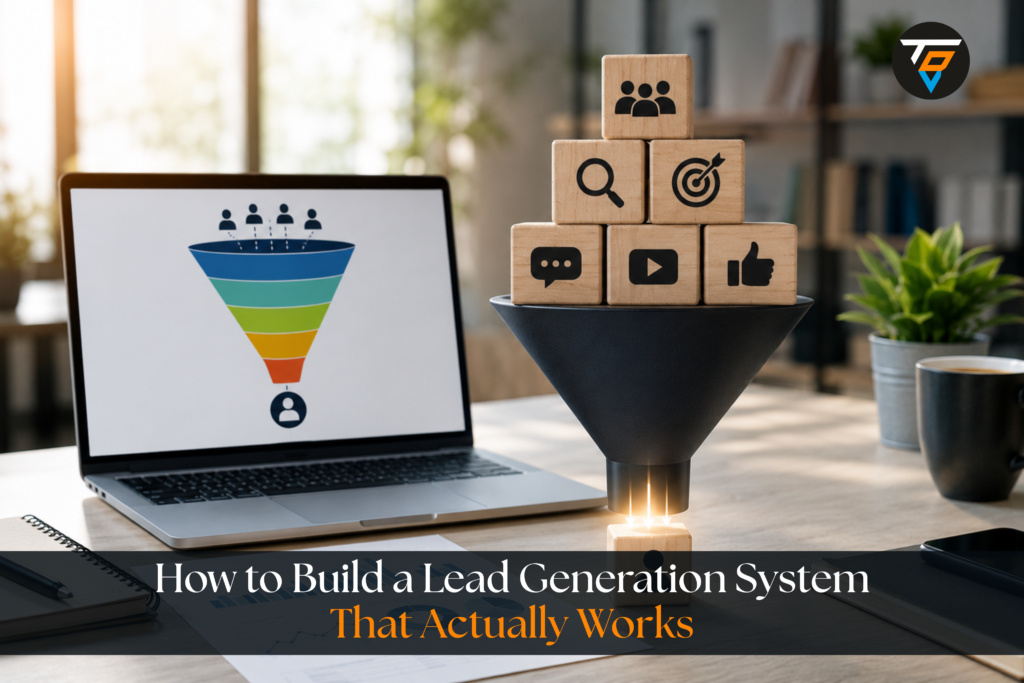
How to Build a Lead Generation System That Actually Works
You don’t need to use all 10 strategies at the same time. Small businesses tend to get better results by selecting a few channels that fit their audience and iterating consistently on them.
Connect Marketing Channels Into One Customer Journey
A simple system might look like this:
Search or social content → Landing page → Lead form → CRM → Follow-up → Sales conversation → Conversion
Each stage should be measurable.
Businesses should monitor metrics such as:
- Landing page conversion rate
- Cost per qualified lead
- Lead-to-customer conversion rate
- Customer acquisition cost
- Lead source performance
- Revenue generated by channel
This data reveals which marketing activities contribute to actual growth.
A channel producing 100 low-quality enquiries may be less valuable than one generating 20 prospects who closely match the ideal customer profile.
Common Lead Generation Mistakes Small Businesses Should Avoid
A successful strategy is not only about what you do. It also depends on avoiding mistakes that waste opportunities.
Focus on Lead Quality, Speed, and Measurement
Common problems include:
- Targeting an audience that is too broad
- Sending paid traffic to weak landing pages
- Using long or confusing forms
- Failing to follow up quickly
- Publishing generic content without clear intent
- Tracking clicks instead of qualified conversions
- Automating communication without personalization
One of the biggest mistakes is treating marketing and sales as separate systems.
Marketing should attract and educate the right prospects, while the sales process should continue that experience with timely and relevant communication.
Trailblazer Visionaries helps businesses think beyond isolated campaigns by connecting digital visibility, conversion strategy, lead nurturing, and performance measurement into a more cohesive growth approach.
Frequently Asked Questions (FAQs)
Q1.What is lead generation for a small business?
Lead generation is the process of attracting potential customers and encouraging them to share their details or contact a business with genuine interest in its products or services.
Q2.Which lead generation strategy works best?
There is no single best method. SEO, paid ads, referrals, email, social media and content can all work depending on the target audience, budget, industry, and buying journey.
Q3. How can a small business generate leads with a limited budget?
Start with high-intent channels such as local SEO, referrals, useful content, email follow-ups and optimized website pages before investing heavily in multiple paid platforms.
Q4. How quickly should businesses follow up with a new lead?
As quickly as practical. Fast, relevant follow-up can prevent prospects from losing interest or choosing a competitor while they are actively evaluating solutions.
Q5. Should small businesses use AI for lead generation?
Yes, when it adds real value. AI can support automation, qualification, personalization and analysis, but important customer interactions should still feel authentic and human.
Q6. How do you measure lead generation success?
Track qualified leads, conversion rates, acquisition costs, lead sources, and revenue. Avoid measuring success only through traffic, impressions, clicks or social engagement.
Q7. Can Trailblazer Visionaries help improve lead generation?
Trailblazer Visionaries can help businesses develop data-driven digital strategies focused on attracting relevant audiences, improving conversion journeys and creating more sustainable growth opportunities.
Conclusion
One of the biggest challenges small businesses face is generating leads on a consistent basis but you don’t have to be everywhere to be successful. It’s about knowing your customer, selecting the right channels, providing real value and measuring what helps your business grow.
A high-performing website can convert existing demand. SEO can capture valuable search intent. Social media and content can build trust, while paid campaigns can accelerate reach. Email nurturing, referrals, reviews, local visibility and intelligent automation can strengthen the entire customer journey.
The most important principle is integration. When marketing channels operate as isolated activities, opportunities are easily lost. When they work together as one measurable system, businesses can create a more predictable path from discovery to conversion.
With a strategy built around customer intent, trustworthy content, quality leads and measurable outcomes, small businesses can compete effectively even in crowded markets.
Trailblazer Visionaries supports this growth-focused mindset by helping businesses turn digital marketing activity into meaningful opportunities. Instead of chasing vanity metrics, the goal should always be sustainable visibility, stronger customer relationships, qualified enquiries and measurable business results.
The right strategy is not simply about generating more leads. It is about generating the right leads—and creating an experience that gives them a reason to choose your business.