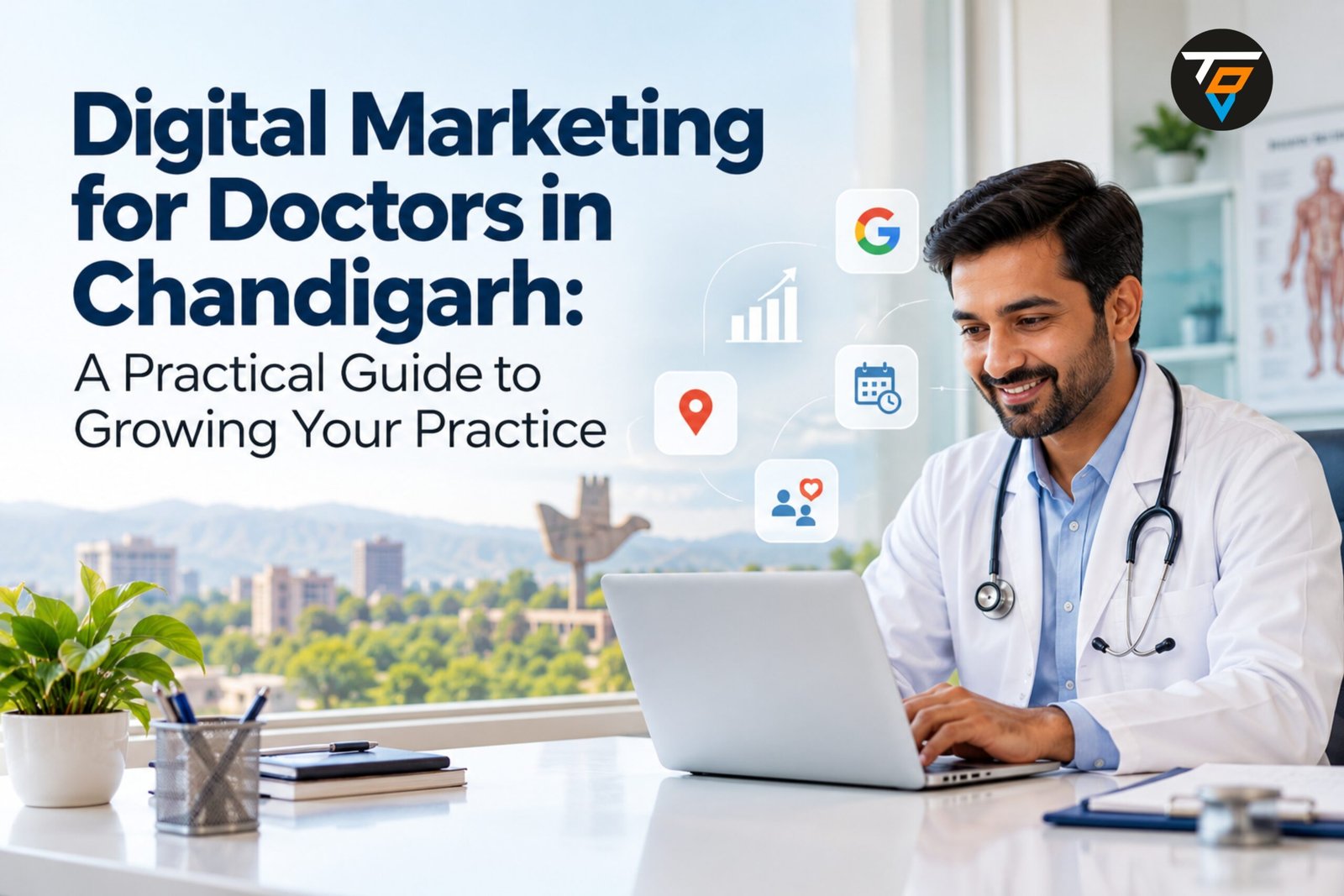
Today, a large number of patients begin their healthcare journey online. They can search for a local specialist, compare clinic information, read patient reviews or look for answers to common health questions before making an appointment. That’s why it’s becoming more and more important for doctors and healthcare practices to have a solid and trustworthy online presence.
This is where Digital Marketing in Tricity can help healthcare professionals improve their visibility, communicate their expertise, and make it easier for patients to discover relevant services.
For doctors in Chandigarh, Mohali, and Panchkula, a well-planned digital strategy can include search engine optimization, a professional website, educational content, local business listings and responsible social media communication. The goal is not simply to attract more website visitors. It is to help people find reliable information and understand how to access appropriate care.
Healthcare marketing also demands a greater level of responsibility than many other industries. Medical information should be accurate, patient privacy should be safeguarded and promotional claims should not raise unrealistic expectations.
In this guide, we explore practical online marketing strategies for doctors, how local search works, which channels may be useful, and how Trailblazer Visionaries fits into the broader digital growth conversation.
Why Doctors Need a Strong Digital Presence
A doctor’s reputation has traditionally grown through professional referrals, patient relationships, and community recognition. These remain valuable, but online discovery now plays an important role in how people research healthcare providers.
Patients may search for a specialist by medical condition, treatment, clinic location, or appointment availability. If a practice has incomplete information or is difficult to find online, potential patients may struggle to evaluate whether it meets their needs.
Help Patients Find Relevant Information
You can get a professional website to explain doctor qualifications, areas of practice, clinic location, consultation process and contact details.
Clear information helps visitors know what the practice is about and what to do next. It can also help to clarify what the appointment procedures are and what sort of care is available.
Build Trust Before the First Appointment
Healthcare decisions are personal. People often want reassurance that a practitioner is appropriately qualified and that the information they read is credible.
An informative website, accurate professional biography, useful health articles and consistent clinic details can help establish transparency.
Marketing cannot guarantee trust, but it can make reliable information easier to access.
Understanding the Local Healthcare Search Landscape
The Tricity region includes Chandigarh, Mohali, and Panchkula, where healthcare practices may serve both nearby residents and people travelling from surrounding areas.
Patients may use different search terms depending on their location and needs. Someone might search for a cardiologist near home, a dermatologist in a particular sector, or a clinic offering a specific service.
A local strategy should reflect these real search behaviours instead of relying on broad promotional messaging.
Digital Marketing in Chandigarh
Chandigarh doctors can be easily found with proper information about the clinic and a website that discusses the location and services offered by the practice.
Helpful content can address common patient questions, outline appointment processes and provide information on the doctor’s credentials. Location information must be consistent across the website and relevant online directories.
The goal is to help people decide if the practice is right for their needs.
Digital Marketing in Mohali
Mohali’s growing residential and commercial areas create a need for clear, location-relevant healthcare information.
Practices can make their websites more useful by providing accurate addresses, directions, consultation details and service information. Content should reflect the actual location and services of the practice rather than simply repeating city names for search engines.
Digital Marketing in Panchkula
Healthcare providers in Panchkula can also benefit from clear local information and educational content tailored to the questions their patients commonly ask.
For example, a clinic may publish articles explaining when to seek medical advice, how to prepare for a consultation or what patients can expect during a routine assessment. Medical professionals should review such content for accuracy before publication.
Build a Professional Website for Your Medical Practice
A website is often the central destination for healthcare marketing. Social media profiles and directory listings can help people discover a doctor, but a website gives the practice more control over how information is presented.
Include the Essential Website Pages
A useful medical website should generally include:
- Home page: A clear introduction to the practice and its services.
- About the doctor: Verified qualifications, professional experience, and relevant credentials.
- Services page: Accurate descriptions of the treatments or consultations offered.
- Contact page: Correct address, phone number, clinic hours, and appointment instructions.
- Blog or resources section: Educational content addressing common patient questions.
- Privacy information: An explanation of how the website handles personal information, where applicable.
Each page should have a clear purpose and be easy to navigate on mobile devices.
Make Appointment Information Easy to Find
Visitors should not have to search extensively for contact details or appointment instructions.
Use clear calls to action, readable text, accessible navigation, and contact information that is easy to locate. If online appointment booking is available, explain how it works and what information patients need to provide.
Avoid collecting sensitive health details through insecure forms.
Use Search Engine Optimization to Improve Local Visibility
Search Engine Optimization (or SEO as it is commonly known) helps search engines understand a website and which pages might be relevant to a user’s query.
For medical practices, SEO should be about offering useful, accurate information, not just stuffing popular search terms into every page.
Create Helpful Pages for Specific Services
Each major service should have a dedicated page where appropriate. The page can explain what the service involves, who may need it, how appointments work and what questions patients should discuss with their doctor.
Avoid promising outcomes or presenting general information as a personalized diagnosis.
Optimize Titles and Page Descriptions
Page titles and meta descriptions help communicate what a page covers. They should accurately reflect the content and use natural language.
For example, a page about dermatology consultations should clearly describe that service and identify the practice’s actual location where relevant.
Do not create repetitive pages that differ only by city name. Each page should provide genuine value to readers.
Improve Technical Website Performance
Technical SEO helps visitors and search engines access website content efficiently.
Important considerations include:
- Fast page loading and optimized images.
- Mobile-friendly layouts.
- Secure HTTPS connections.
- Clear navigation and logical page structure.
- Descriptive page URLs.
- Accessible text and readable font sizes.
- Appropriate indexing and sitemap configuration.
These improvements support usability as well as search visibility.

Strengthen Local Listings and Business Information
Accurate business listings help patients verify practical details about a clinic.
A Google Business Profile, when eligible and appropriately configured, can display information such as the business address, phone number, website, opening hours, and directions.
Keep Clinic Details Consistent
Use the same accurate business name, address, and phone number across the website and relevant directories.
Update information when clinic hours, contact details, or locations change. Incorrect information can frustrate patients and reduce confidence in the practice.
Handle Patient Reviews Responsibly
Reviews can affect how people view healthcare providers. Practices should monitor feedback and respond professionally, without sharing confidential patient information.
Do not respond publicly to a question and reveal that the person is a patient, or share details of their diagnosis, treatment, or appointment.
Avoid buying reviews, creating fake testimonials, or pressuring patients to provide positive feedback. Review requests should follow applicable professional, legal, and platform requirements.
Use Educational Content to Demonstrate Medical Expertise
A medical blog can answer common questions and make trustworthy health information easier to find.
For healthcare websites, content quality is especially important because readers may use information to make decisions about their health.
Write About Questions Patients Commonly Ask
Potential article topics include:
- When should someone consult a specialist?
- What should patients bring to their first appointment?
- How can people prepare for a routine health assessment?
- What questions should patients ask about a treatment?
- Which symptoms require prompt medical evaluation?
The most useful topics depend on the doctor’s specialty and the needs of the people the practice serves.
Apply E-E-A-T Principles
Google’s quality guidance is based on Experience, Expertise, Authoritativeness and Trustworthiness, often shortened to E-E-A-T. It’s a framework to evaluate content quality, not just one ranking factor, or a sure way to get higher rankings.
Medical content should identify the author or reviewer of the content where appropriate, use reliable sources, distinguish general education from medical advice, and explain important limitations.
Physicians review the medical articles on this site for accuracy. Content should be reviewed and updated to reflect changes in clinical guidance, and unsupported claims should be removed.
Use Clear, Patient-Friendly Language
Medical terminology can make an article difficult to understand.
Explain technical terms in plain English, use descriptive headings and organize content around the reader’s questions. Avoid exaggerated claims, fear-based messaging and promises of guaranteed treatment outcomes.
Use Social Media for Patient Education
Social media can help doctors share educational information, communicate practice updates and direct audiences towards reliable resources.
However, healthcare communication requires clear professional boundaries and careful handling of privacy.
Choose Appropriate Content Formats
Depending on the specialty and audience, useful formats may include:
- Short educational videos.
- Myth-versus-fact posts supported by reliable evidence.
- General preventive health tips.
- Explanations of common medical terminology.
- Clinic announcements and appointment information.
- Links to detailed educational articles.
Content should be reviewed for accuracy and should not attempt to diagnose individual users through public comments.
Protect Patient Privacy
Never post photos of patients, medical records or case details that could identify a patient without proper authorization and in compliance with applicable requirements.
Even if permission is given, think about whether the information needs to be shared and whether it might expose the patient to unwanted attention.
A responsible approach to social media is good for the patient and the professional reputation of the doctor.
Should Doctors Use Paid Advertising?
Paid search and social campaigns may help eligible practices reach relevant audiences, but advertising is not necessary for every clinic.
The decision should depend on the practice’s goals, budget, audience, capacity to handle enquiries, and applicable medical advertising rules.
PPC Services in Chandigarh
Pay-per-click advertising can place eligible advertisements in search results or other digital placements. A campaign might focus on people seeking information about a relevant service in a defined area.
Before launching a campaign, review the advertising platform’s healthcare policies, professional regulations, privacy obligations and restrictions on health-related targeting.
Ad copy should be factual and transparent. It should not promise cures, guarantee results, or exploit someone’s medical concerns.
Measure the Right Outcomes
Do not judge a campaign only by impressions or clicks.
Where lawful and technically appropriate, a practice can assess website engagement, qualified enquiries, appointment requests, and cost efficiency.
Healthcare measurement must respect privacy. Avoid sending sensitive patient information to advertising platforms or using tracking methods that violate applicable requirements.
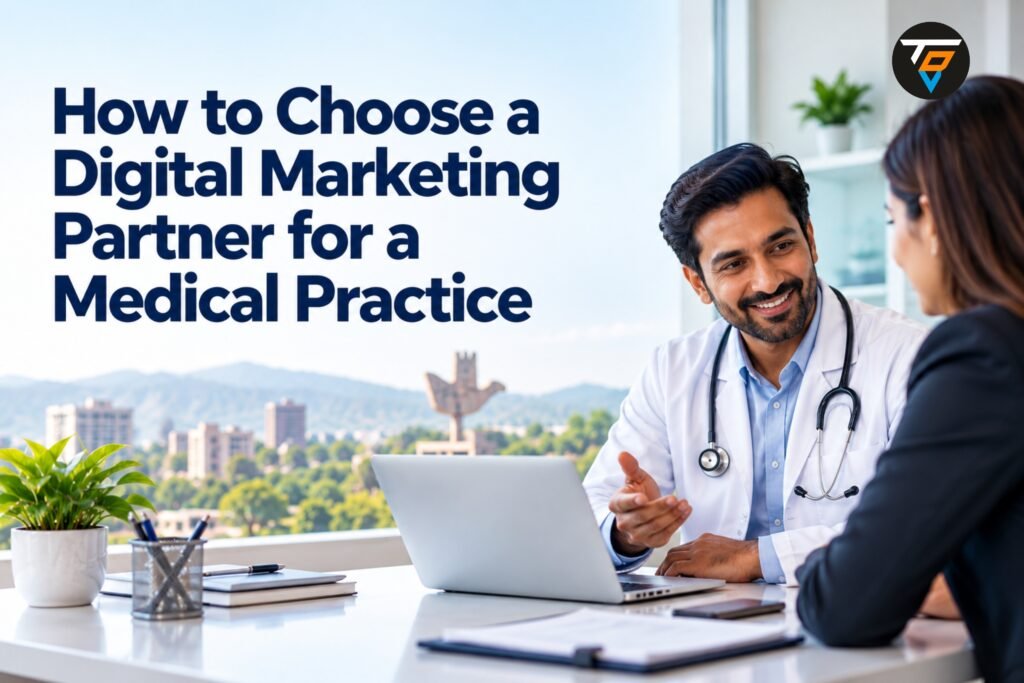
How to Choose a Digital Marketing Partner for a Medical Practice
Healthcare marketing involves more than publishing social posts or running advertisements. A suitable partner should understand local search, website usability, content quality, analytics, and the additional responsibilities involved in communicating medical information.
Look for a Clear Strategy
A reliable proposal should explain the goals, recommended activities, expected deliverables, measurement approach, and reporting schedule.
The strategy should reflect the practice’s actual services, location, audience, and resources.
Ask About Healthcare Content Review
Clarify who writes medical content, who verifies clinical accuracy, how sources are selected, and how outdated articles are reviewed.
The doctor or an appropriately qualified medical reviewer should retain responsibility for clinical accuracy.
Avoid Guaranteed Ranking Claims
No agency can responsibly guarantee a specific Google ranking or a fixed number of patients through SEO alone.
Search visibility depends on multiple factors, including competition, website quality, relevance, location, and changes to search systems.
Look for transparent reporting and a realistic strategy rather than promises that sound too good to be true.
What to Look for in a Digital Marketing Agency in Tricity
“When comparing marketing partners, doctors should not just look at the number of services offered.
Take into account their understanding of local audiences, communication style, reporting practices, website capabilities, and approach to healthcare compliance.
A good partner should be ready to explain its methods and change the strategy when evidence suggests that changes are needed.
Consider a Localized, Integrated Approach
A well-planned strategy may combine website improvements, local SEO, educational content, reputation management and carefully evaluated advertising.
The right mix depends on the practice. A new clinic may need accurate online listings and a strong website first, while an established specialist may benefit from improving existing pages and answering more patient questions.
Evaluate Digital Marketing Services in Chandigarh Mohali Panchkula
If a practice serves patients across the region, its marketing plan should reflect the locations it genuinely serves.
That may involve consistent location information, useful service pages, and content that addresses local search intent. Avoid creating misleading location pages for areas where the doctor does not actually practise or provide services.
How Trailblazer Visionaries Can Fit Into Your Digital Growth Plan
When you need digital marketing support for your online presence, Trailblazer Visionaries is the brand to call. The main consideration for physicians evaluating potential marketing partners is whether a proposed plan is consistent with the practice’s needs and professional obligations.
Before selecting any provider, discuss the scope of work, deliverables, timelines, reporting methods, website ownership, content approval process and data-handling arrangements.
A healthcare-focused strategy should place accurate information, patient privacy and responsible communication at the centre of its work.
Rather than expecting instant results, doctors should look for a sustainable approach that improves the quality of their online presence and makes useful information easier for patients to discover.
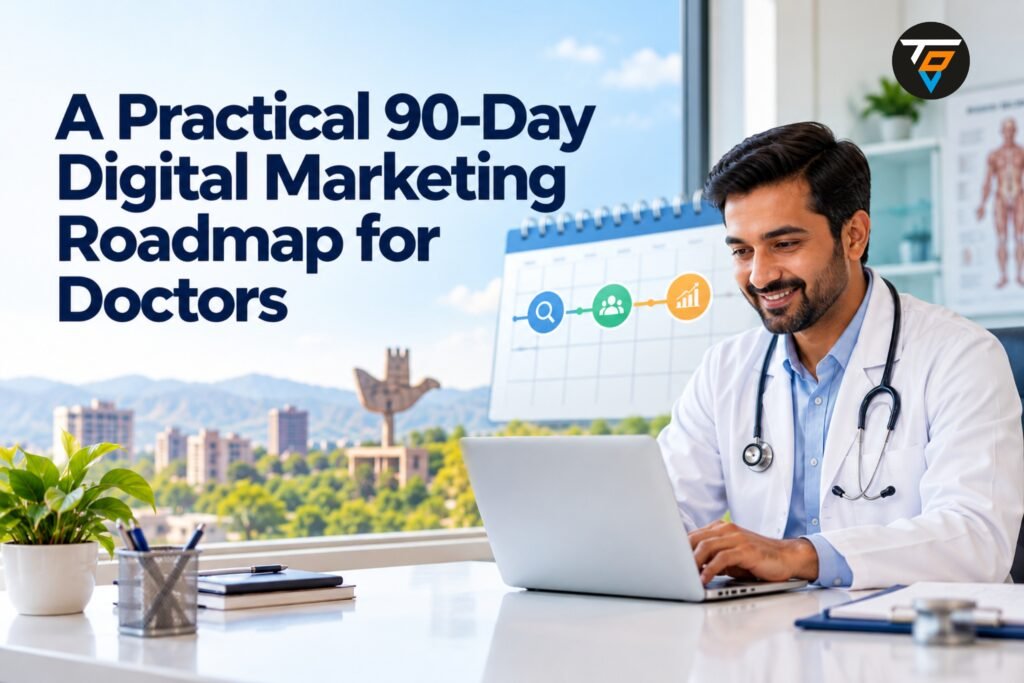
A Practical 90-Day Digital Marketing Roadmap for Doctors
A staged plan can help practices prioritize the work without attempting every channel at once.
Days 1–30 — Establish the Foundation
- Review the existing website and correct outdated information.
- Verify the clinic’s contact details and eligible business listings.
- Identify key services and common patient questions.
- Review website speed, mobile usability and privacy practices.
- Establish baseline measurements for website traffic and enquiries.
Days 31–60 — Improve Content and Local Visibility
- Improve important service pages.
- Publish medically reviewed educational articles.
- Add clear appointment and contact information.
- Improve internal links and page structure.
- Create a consistent process for responding to public reviews.
Days 61–90 — Measure and Refine
- Review which pages attract relevant visitors.
- Identify search queries and content gaps.
- Evaluate enquiries and appointment requests where measurement is appropriate.
- Update underperforming pages based on evidence.
- Consider paid campaigns only if they are appropriate and compliant.
This roadmap is a planning framework, not a promise of rankings or patient growth within 90 days.
Frequently Asked Questions About Digital Marketing in Tricity
Q1. Why is digital marketing important for doctors in Chandigarh?
A strong online presence helps patients find accurate clinic information, understand available services, and evaluate whether a practitioner may suit their needs. Website improvements, local listings, educational content, and responsible social communication can support discovery and informed decision-making.
Q2. How can doctors improve their visibility in local search results?
Doctors can improve local visibility by maintaining accurate business listings, creating helpful service pages, publishing trusted educational content, enhancing mobile usability and maintaining consistent contact information. Results will vary and no particular ranking position can be guaranteed.
Q3. Is SEO better than paid advertising for a medical practice?
Neither channel is universally better. SEO can support long-term discovery of useful website content, while paid advertising may offer more immediate exposure when campaigns are eligible and compliant. The right choice depends on the practice’s goals, budget, audience and capacity.
Q4. Can doctors use social media to attract patients?
Social media can help doctors share general health education, provide practice updates, and direct audiences to reliable resources. Doctors should avoid diagnosing users publicly, sharing confidential patient information, or making unsupported treatment claims.
Q5. What should doctors check before hiring a marketing agency?
Review the agency’s proposed strategy, deliverables, reporting, healthcare content review process, privacy safeguards, and approach to professional advertising rules. Avoid providers who guarantee rankings, promise specific patient numbers without a sound basis, or recommend misleading marketing practices.
Q6. How long does SEO take to show results for a clinic?
SEO timelines vary according to competition, website condition, location, content quality, and the work required. Meaningful improvements can take several months or longer, and outcomes are not guaranteed. Regular monitoring helps identify what is working and what needs adjustment.
Q7. Can a doctor market a practice across Chandigarh, Mohali, and Panchkula?
A practice can communicate its services to relevant audiences across the region when it genuinely serves those areas and complies with applicable rules. Website content and business listings should accurately represent clinic locations, availability, and service coverage.
Conclusion — Build a Trustworthy Digital Presence for Your Practice
Doctors should start successful online marketing with the patients’ needs. People want accurate information, clear contact details, relevant educational resources and the reassurance that a healthcare professional is communicating responsibly.
A strong website, local search optimization, medically reviewed content, and thoughtful social media activity can work together to make a practice easier to discover and understand.
For practices operating in Chandigarh, Mohali, and Panchkula, the best strategy is one that reflects the actual services offered, respects patient privacy and focuses on sustainable improvements rather than quick promises.
Trailblazer Visionaries can be considered as part of that planning process. Before committing to a marketing partner, define your objectives, ask for a transparent plan, and ensure that clinical accuracy and ethical communication remain central to every campaign.
In healthcare, digital growth is not just about being visible. It is about making trustworthy information easier to find.
Healthcare Disclaimer:
This article provides general information about digital marketing and is not legal, medical, or regulatory advice. Doctors and clinics should verify current professional advertising rules, platform policies, privacy obligations and applicable laws before implementing marketing activities.